The New Jim Crow
Professor Young
March 18, 2017
Slavery By Another Name: Significant Quotes
Chapter 8
1. "They had learned through bloody experience the dangers of challenging the status quo of white domination, and also that in the inflexible rituals of southern racial interaction men such as themselves were expected to prostrate themselves before whites as proof that they too gave no credence to the inquiries demanded by President Roosevelt and Judge Jones" (Blackmon 174).
1. "They had learned through bloody experience the dangers of challenging the status quo of white domination, and also that in the inflexible rituals of southern racial interaction men such as themselves were expected to prostrate themselves before whites as proof that they too gave no credence to the inquiries demanded by President Roosevelt and Judge Jones" (Blackmon 174).

Response: Simply requesting for the rights that were supposed to be given unto you by the government was seen as a threat to white Southerners. Already being labeled as property, white Southerners continued to reassert their dominance by physically and legally abusing African Americans. Not wanting to revert back to physical enslavement, African Americans conformed and continued to deal with this abuse.
2. "The Turners’ lawyers conceded that their clients indeed had engaged in a form of slavery, but that involuntary servitude wasn't peonage and therefore wasn't illegal. 'Unlawfully and knowingly holding a person forcibly and against his will and requiring such person to labor for the holder to work out a debt claimed by the holder to be due him ...does not constitute holding such person to a condition of peonage under the laws of the United States,' they wrote" (Blackmon 175).
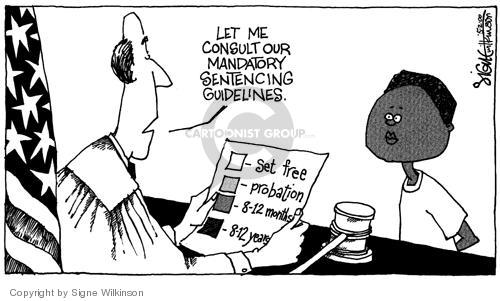
Response: Analyzed further throughout the chapter, Congress left a legal loophole for white Southerners to ultimately legalize slavery within the prison system. To convict someone of a crime that wasn't deemed illegal defeats the purpose of the conviction. Within the South, the law originally created by Congress transformed into a legal system that was ultimately run by white Southerners.
3. "Following the growing national sentiment that race matters be left alone, Congress did nothing to fill the vacuum—leaving a constitutional limbo in which slavery as a legal concept was prohibited by the Constitution, but no statute made an act of enslavement explicitly illegal" (Blackmon 176).

4. "In the rare instance that a black man or woman received a day in court, attorneys simply ridiculed the very idea of a black man being treated respectfully and anyone who appeared willing to do so. Triggering an almost tribal form of group solidarity, the tactic usually triggered juries of white men to guffaw at the comedy of a black man under oath" (Blackmon 178).

Response: Being that juries were composed of white Southerners, if an African American ever received a trial their guilty conviction would come without hesitation. In the court of law, the cognitive bias of white Southerners would always justify the legal mistreatment of African Americans.
5. "God forbid that the time will ever come in this country when you are helpless and distressed and have been the victim of oppression when you will be denied that protection of the law to which you appeal and to which every law-abiding human being is entitled among all civilized people,' Jones told the jury" (Blackmon 179).
Response: To imagine the legal enslavement of white Americans instead of African Americans is an interesting analysis. However, being that African Americans were removed from their native country, one has to wonder if white slavery would have even happened. Could you imagine white Americans creating "white codes", racially profiling, and enslaving other white Americans through convict leasing?
3. "Following the growing national sentiment that race matters be left alone, Congress did nothing to fill the vacuum—leaving a constitutional limbo in which slavery as a legal concept was prohibited by the Constitution, but no statute made an act of enslavement explicitly illegal" (Blackmon 176).

Response: Convict leasing became, is currently as well, the new form of slavery. The 13th amendment created a loophole that white Southerners quickly took advantage of in result of the Emancipation Proclamation. White Southerners created black codes and trumped-up charges to detain then regain free forced labor through convict leasing. This act of enslavement, even though they were convicted of a legal charge, was never deemed illegal by Congress.
4. "In the rare instance that a black man or woman received a day in court, attorneys simply ridiculed the very idea of a black man being treated respectfully and anyone who appeared willing to do so. Triggering an almost tribal form of group solidarity, the tactic usually triggered juries of white men to guffaw at the comedy of a black man under oath" (Blackmon 178).
Response: Being that juries were composed of white Southerners, if an African American ever received a trial their guilty conviction would come without hesitation. In the court of law, the cognitive bias of white Southerners would always justify the legal mistreatment of African Americans.
5. "God forbid that the time will ever come in this country when you are helpless and distressed and have been the victim of oppression when you will be denied that protection of the law to which you appeal and to which every law-abiding human being is entitled among all civilized people,' Jones told the jury" (Blackmon 179).
Response: To imagine the legal enslavement of white Americans instead of African Americans is an interesting analysis. However, being that African Americans were removed from their native country, one has to wonder if white slavery would have even happened. Could you imagine white Americans creating "white codes", racially profiling, and enslaving other white Americans through convict leasing?
Chapter 9
1. "And even among the most ardent abolitionists, few white Americans in any region were truly prepared to accept black men and women, with their seemingly inexplicable dialects, mannerisms, and supposedly narrow skills, as true social equals" (Blackmon 182).
1. "And even among the most ardent abolitionists, few white Americans in any region were truly prepared to accept black men and women, with their seemingly inexplicable dialects, mannerisms, and supposedly narrow skills, as true social equals" (Blackmon 182).

Response: No matter what, African Americans would never equate to white Americans. It simply does not matter what social skills you possess, how many schools you attend, or what your financial or social status may be. To white Americans, African Americans are seen as inferior to them and will not be considered as equals.
2. "If anything, the poisoned atmosphere and accelerating disintegration of the structure of civil society more resembled to blacks a time two centuries earlier, when white slave traders and their corrupted indigenous allies descended without explanation upon the villages of West Africa to plunder the native population" (Blackmon 182).
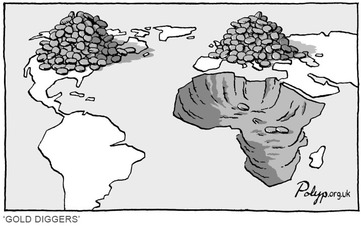
Response: The resurgence of the blatant racial division and abuse of African Americans created a greater fear of survival among the urban population. The exploitation of African Americans' bodies as both entertainment and economic profit was a mirrored reflection of slave trades. When African Americans were being sold and transported to their slave owners' plantations, the fear of survival was eminent. Although lynching and whipping transformed into a legal system, the physical abuse of African Americans served as a reminder of the conditions of slavery.
3. "Many believed that once schools and wages were extended to liberated slaves, they could be quickly and fully assimilated into U.S. society. In the span of half a generation, they imagined the nation's eleven million African Americans learning to read and write and becoming dark-skinned versions of the yeoman white farmers fanning across the western prairies" (Blackmon 182).

Response: The sense of superiority above another group has always been both disturbing and bothersome. What makes it worse is that these white Southerners went through extreme measures to maintain their superiority. To make sure that a group of people don't rebel against a system that was created to both socially and financially hinder them, white Southerners decided to enslave and monitor African Americans. Honestly, the mentality of white Southerners will continue to bother me because there is no legitimate reasoning to support the enslavement other than pure laziness. Fearful of rebellion, white Americans continued to deprive African Americans of their rights and access to education.
4. "Regardless of the violence used by whites against slaves, there was a loose consensus, even in the South, that whites and blacks were linked in their humanity and that God demanded some measure of moral consideration and compassion for all. Northern opposition to slavery before the Civil War was deeply rooted in this religious precept" (Blackmon 182-183).

Response: The use of religion as a justification for enslaving African Americans was a solid foundation for the expansion of this abuse. The racial hierarchy that white Southerners continued to maintain was observed through both a religious and biological lenses. When Charles Darwin's publication was circulated, white Americans began to analyze African Americans as human beings. Darwin's theory of evolution displayed that slaves and slave owners are the same race: the human race. Christianity also corroborated that slaves and their owners were the of the same genetic makeup.
5. "The new version of events declared that African Americans—being fundamentally inferior and incorrigible—were in the new century a burden on the nation rather than victims of its past" (Blackmon 184).
Response: The use of publications to further objectify African Americans was heavily circulated throughout the South. The hopes of having any human rights were quickly dashed and now African Americans were being portrayed as beasts within the media. Minstrel shows and book publications portrayed African Americans as rapists, idiots, criminals, and animalistic. These publications were even circulated through the education system. Writers, like Thomas Nelson Page, began to label African Americans as a burden to the South. In addition to being dehumanized, African Americans were now being blamed for their ethnicity.


